Budgie Body Language: What Your Bird Is Trying to Tell You
Budgies are busy, expressive birds, but they don't come with subtitles. A raised head, a soft chirp or a sudden flurry of wing movement can mean very different things depending on what else is happening.
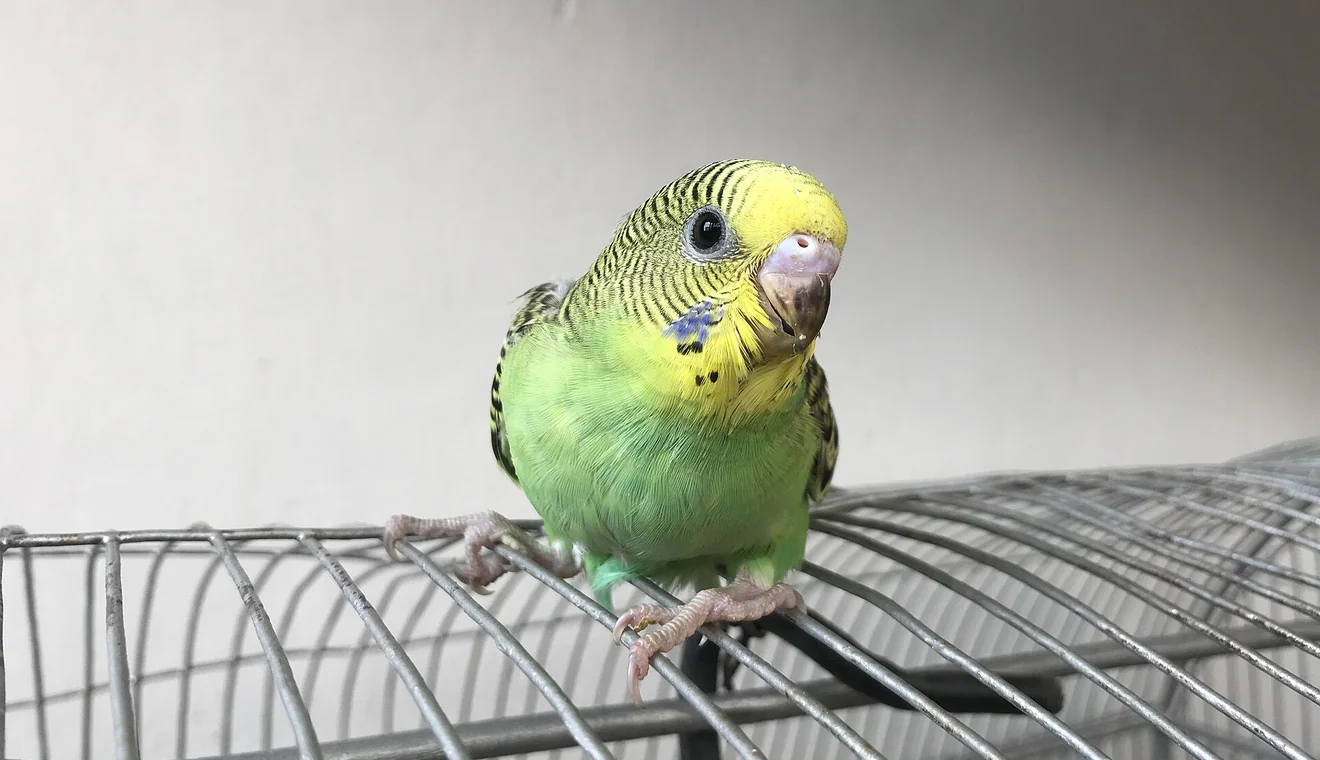
The most useful way to understand budgie body language is to look at the whole bird—posture, feathers, eyes, breathing and behaviour—and compare it with what is normal for that individual. One movement on its own rarely tells the full story.
There is one distinction worth remembering from the start: some signs that look like ordinary behaviour can actually be illness, particularly persistent tail bobbing in time with breathing, lethargy or staying fluffed up.
Relaxed budgie body language
A comfortable budgie often appears alert but not rigid. Its posture is balanced, it moves naturally between perches and it may chirp quietly, preen or investigate objects.
Signs that can be consistent with relaxation include:
- Soft, varied vocal sounds rather than frantic repeated alarm calls.
- Normal preening and gentle feather adjustment.
- Resting with one foot tucked up, when the bird is otherwise well.
- A comfortable, balanced posture on a familiar perch.
- Willingness to explore, forage and interact on the bird's own terms.
None of these is an absolute guarantee. A quiet bird isn't always happy, and a fluffed bird may simply be sleeping or keeping warm. Look at the circumstances and whether the pattern is normal.
Beak grinding
Soft grinding or rubbing of the beak sometimes occurs during relaxed, sleepy moments. But you shouldn't diagnose a bird's mood from one sound alone.
Check whether the bird is otherwise behaving normally, eating, breathing comfortably and maintaining its usual activity. If anything has changed suddenly, investigate rather than assuming the sound is reassuring.
Signs of fear or stress
A budgie may become tense, lean away, freeze, flee or vocalise sharply when something frightens it.
Common triggers include sudden hands entering the cage, unfamiliar pets approaching, loud noises or a change in the room. A new bird may also become very still when a person gets close.
Watch for a cluster of clues: narrowed posture, flattened feathers, rapid escape movements, repeated alarm calling or attempts to put distance between the bird and an object.
A frightened budgie doesn't need to be “shown who's boss”. Give it an escape route, reduce the trigger and allow it to settle.
What to do when your budgie backs away
Stop moving closer. Speak calmly, keep movements slow and let the bird choose whether to approach.
If you are hand-taming a budgie, short positive sessions are more useful than forcing it to step on your finger. A bird that retreats is giving you information about its comfort level.
Never chase a budgie around its cage to achieve a training goal.
Head bobbing: excitement, communication or something else?
Budgies sometimes bob their heads during social interaction, courtship or excitement. It may be accompanied by chirping, playful movement or interest in another bird.
Context is crucial. Normal social head movement is different from a bird repeatedly struggling to breathe or losing balance.
If movements look involuntary, are accompanied by unusual breathing or the bird appears weak, seek advice from an avian vet. Don't label an unfamiliar symptom as “just being playful”.
Wing stretching, shaking and flapping
A budgie may stretch a wing and a leg, shake out its feathers after preening or flap to exercise. In an active, healthy bird these can be normal movements.
Repeated frantic flapping in a confined space may instead suggest fear, poor access to exercise or an environmental problem. Look for what happened immediately before it started.
Budgies need appropriate flight opportunities and a spacious, enriched environment. A small cage crowded with toys isn't an adequate substitute for safe movement.
The RSPCA emphasises meeting pet birds' natural behavioural needs, including opportunities to forage and exercise.
Why do budgies puff up their feathers?
Feather fluffing has several possible explanations. A bird may temporarily fluff up while resting, preening or adjusting its body temperature.
Persistent fluffing combined with reduced activity, poor appetite, a hunched posture or sleeping unusually much is different. Birds can conceal illness, and those signs need prompt assessment by an avian vet.
Don't use a single photograph of a “fluffy budgie” as evidence that your bird is well or unwell. Watch whether the bird becomes alert, moves normally and resumes its usual behaviour.
Sudden changes matter
A bird that's normally active and chatty but has spent most of the day still and fluffed up warrants more concern than a brief sleepy pose at the usual bedtime.
Keeping a simple record of feeding, droppings and activity can help when explaining concerns to a vet.
Tail bobbing: when it is a warning sign
There is a difference between ordinary tail movement during balance or movement and the tail moving markedly up and down with every breath.
VCA Animal Hospitals identifies pronounced tail bobbing associated with breathing, open-mouth breathing, weakness and other changes as potential signs of respiratory disease.
If your budgie is breathing with effort, open-mouthed or making pronounced tail movements in time with every breath, contact an avian vet urgently. Do not try home respiratory treatments or wait to see whether the bird becomes more playful.
Birds can deteriorate quickly once clear signs of illness appear.
Budgie noises and what context can tell you
Gentle chatter and singing
Varied chirping in a familiar, comfortable setting often accompanies normal activity. Some birds are naturally more vocal than others.
Repeated loud calling
This may be a contact call, a response to other birds, an environmental disturbance or a sign of frustration. Think about when it happens. Does a companion leave the room? Is there a cat outside the window? Has the daily routine changed?
Silence in a usually talkative budgie
Sudden quietness is more useful as a warning sign than silence in a naturally reserved bird. If it comes with reduced eating, weak posture or other changes, seek veterinary advice.
Hissing, biting or moving away
These can be signs that a bird wants distance or feels threatened. Don't punish the bird for communicating discomfort.
Reading eyes, posture and feather position together
Many online charts assign one emotion to a single eye or feather position. Real birds are more complicated.
A budgie with sleek feathers, a low tense posture and a focused stare at a nearby hand might be frightened. The same feather position during active flight or an attentive moment may have another explanation.
Watch what happens before and after the movement. Did your bird relax when you stepped back? Resume eating? Move towards a toy? Those changes are often more informative than a frozen image.
Not every budgie tolerates close handling, and some require more time to become comfortable in a new home.
Building an environment where behaviour is easier to read
A budgie with enough room, appropriate perches, safe toys, social interaction and a predictable daily pattern has more opportunities to display natural behaviour.
Provide safe foraging opportunities and rotate enrichment gradually. Keep the cage in a location where the bird can rest without constant disturbance, while still having suitable companionship and interaction.
Avoid interpreting repeated stress behaviours as a personality quirk when the animal's basic housing or routine may need improvement.
Our New Pet Owner Checklist is useful for thinking through daily routines, equipment and veterinary arrangements.
Common mistakes owners make
Assuming every chirp means happiness
Calls can express different things depending on the situation. Listen for changes and look at posture.
Reading a single feather position as a diagnosis
Feathers change position for warmth, preening, rest, alertness and illness. The full pattern matters.
Ignoring persistent tail bobbing
Pronounced up-and-down tail movement with breathing is a potential medical warning. Get veterinary advice.
Forcing a bird to interact
If it moves away or freezes, reduce pressure. Positive training works better than cornering the bird.
Assuming a new bird is “shy” forever
Adjustment takes time, but persistent inactivity, poor feeding or weakness should not be written off as temperament.
Budgie body language questions
Why does my budgie stand on one leg?
Some relaxed birds rest this way. If it is also weak, fluffed, unusually still or showing other symptoms, seek advice.
Why does my budgie turn its back to me?
It could simply be choosing a different view or putting distance between itself and something. Note the context rather than assigning an emotion automatically.
Is head bobbing always a good sign?
No. It may be normal social behaviour, but unusual movements combined with illness or breathing signs need assessment.
Can I tell if my budgie trusts me?
Look for gradual voluntary approaches and calm behaviour across repeated interactions. Trust isn't proven by one gesture and shouldn't be forced.
Learn your own bird's normal
Spend a little time observing your budgie at different points of the day. Notice how it eats, rests, calls, plays and responds to familiar people.
Once you know that baseline, you can read its body language with more confidence—and spot the important exceptions. Behaviour can communicate comfort or discomfort, but it cannot replace a vet's assessment when a bird seems ill.
Sources and further reading
- RSPCA: Bird Behaviour — enrichment, fear and natural behaviours in companion birds.
- VCA Animal Hospitals: Recognising Signs of Illness in Pet Birds — illness-related changes in behaviour and breathing.
- VCA: Respiratory Disease in Birds — tail bobbing and respiratory warning signs.