Dog Jumping Up at Visitors: Calm Greetings Without Jumping
The doorbell rings, the dog charges into the hallway and your guest ends up with paws on their coat before they've said hello. Jumping up is often an excited greeting that has been rewarded by attention, but some dogs jump because they are worried or frustrated. A reliable solution combines a calmer arrival routine with rewarding four paws on the floor.
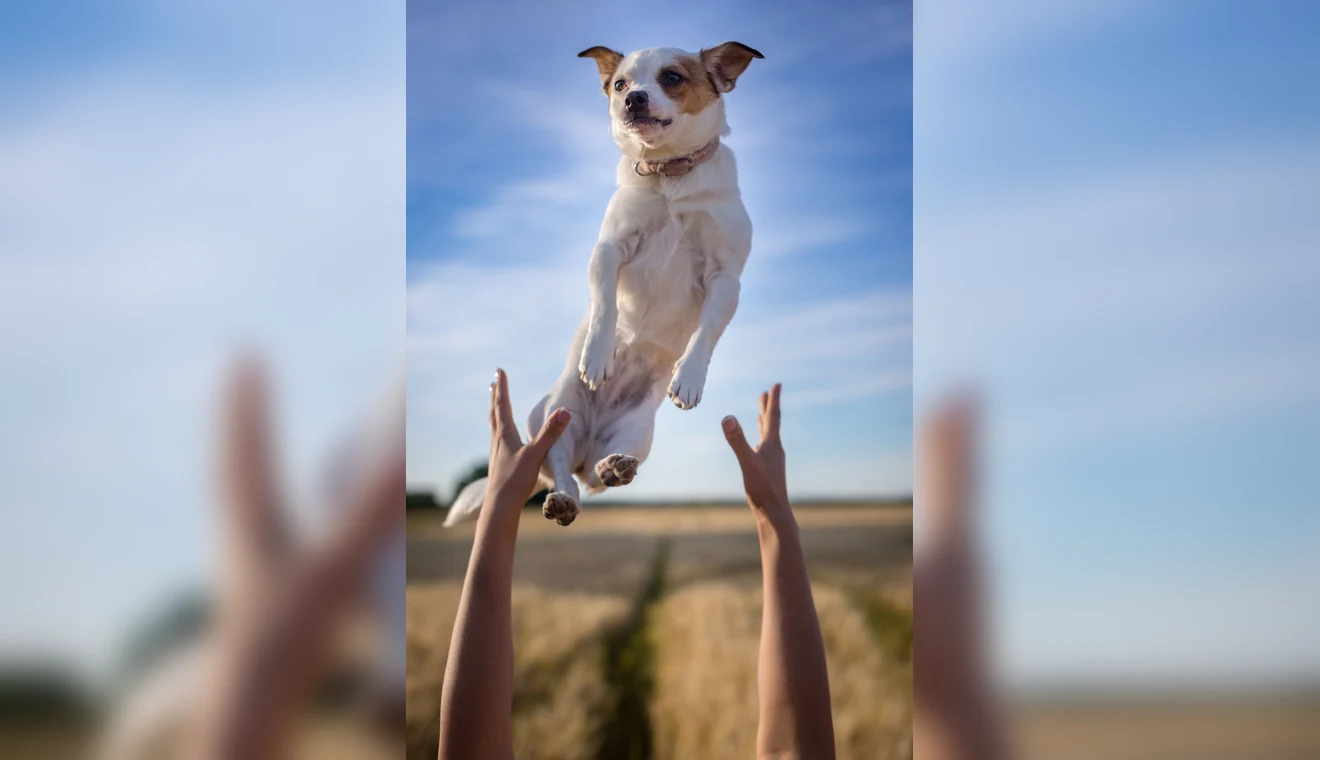
Train the behaviour before visitors arrive. Trying to teach a new rule while somebody is already stepping over the threshold is asking too much of most dogs.
Why do dogs jump up at people?
A dog may want attention, access to a familiar person or a chance to sniff somebody's face. When visitors talk, look at or push the dog away, that interaction can unintentionally reinforce jumping. Dogs Trust also explains that stress and frustration can drive the same outward behaviour. A loose, wriggly dog is not identical to one with a stiff posture, tucked tail or frantic attempts to get away.
Start with management, not a perfect command
Before the door opens, put the dog behind a baby gate or in a comfortable separate room with a suitable chew. This protects the visitor and prevents repeated practise of the jumping routine. Management is particularly important around children, older people, people carrying babies and anyone likely to lose balance. Do not use a crate as punishment; a trained, comfortable retreat should remain a pleasant place to rest.
Teach 'four paws down' when the house is quiet
Stand with your dog and reward it when all four paws remain on the ground. Take one step closer, pause and reward again if it stays grounded. If it jumps, step back calmly and make the next repetition easier. Work in short sessions with a treat pouch or a few pieces of its normal food. The important action is offering attention and rewards for the position you want, not waiting until after a leap.
Practise with one familiar helper
Ask a trusted person to approach from several paces away. If your dog stays relaxed with paws on the floor, the helper can calmly greet it; if it jumps, the helper pauses or steps away. Keep the session brief, especially with a young, excitable dog. Practise in a garden or spacious room first. A crowded hallway can make it difficult for the dog to learn or for the visitor to respond consistently.
Use a mat or bed as the arrival station
Teach your dog to go to a bed and receive rewards there, starting with no doorbell or visitors. Increase time on the mat gradually. Later add a gentle knock or bell sound, then rehearse with a family member opening and closing the door. Dogs Trust provides a structured visitor-training routine built around settling on a bed. You can adapt the exercise to your layout, but don't expect a newly taught cue to work immediately with six exciting guests.
What should a guest do when the dog jumps?
Ask guests to stand still and avoid excited chatter, reaching down or pushing the dog. If possible, invite them to give attention only when the dog is calm and grounded. If jumping is forceful, it is safer to separate the dog and reset rather than expecting visitors to cope. The visitor does not have to interact at all. Be especially careful where claws can scratch bare skin or a large dog could knock someone over.
Why pushing a dog down may backfire
For some dogs, a push becomes part of a fun physical game. For others, it is frightening. Yelling 'off' repeatedly may add energy without changing the reward for jumping. Avoid lifting knees, grabbing the collar or using harsh corrections. Reward-based repetition is more understandable: approaching people becomes easier when the dog stands or sits calmly, and access pauses when it jumps.
Teach a pause before opening the door
Keep a pot of suitable treats and an accessible barrier near the entrance. Before answering, ask your dog to move to its chosen station, reward and secure the barrier if needed. Invite the visitor in, let coats and bags get sorted, then decide whether the dog is ready for a calm greeting. This removes the most chaotic part of the arrival. Our Dog Crate Training Guide covers creating a voluntary resting space.
What if the dog greets family the same way?
Consistency matters. If your household encourages jumping when you return from work but discourages it with guests, the signal is confusing. Agree on a calm routine for everyone: enter, wait for paws down, then offer attention. A dog that is worried rather than excited should be given distance and reassurance without reinforcing jumping. You don't need a cold reception, just a predictable one.
Excitement versus fear at the doorway
A dog who jumps with a loose body and seeks fuss may be overenthusiastic. A dog who barks, stiffens, growls, retreats and rushes forward may be distressed by visitors. Do not try to solve fear-based jumping by making the person offer treats directly or stroke the dog. Keep the dog separate, provide a safe exit and seek professional advice for threatening behaviour. Our Dog Barking at Strangers deals with fearful reactions.
Can you stop jumping on strangers during walks?
Keep your dog on a secure lead where greetings may occur and practise passing at a manageable distance. If someone asks to pet it, say no until your dog can greet safely. Reward looking towards you or standing quietly while the person remains nearby. For a dog that launches at pedestrians, create space and practise easy exercises before bringing the person closer. You are entitled to protect both the stranger and your dog.
Puppies need particularly clear rules
Young dogs often learn quickly that leaping at a person's face creates attention. Rather than waiting until the dog is heavy enough to be a nuisance, reward floor-level greetings from the beginning. A toy can be a useful alternative to mouthing hands and sleeves. Our Puppy Biting Hands Guide explains how to encourage safe play without physical punishment.
Use sniffing and rest to reduce overexcitement
Before expected guests, offer an appropriate walk or quiet sniffing activity and give your dog time to settle. A dog that has just finished an intense chase game may arrive at the doorway highly aroused. Some dogs benefit from a food puzzle in a separate room while visitors come in. Don't overload a dog with exercise to exhaust it; balance activity, rest and predictable routines. Our Dog Enrichment Ideas offers calmer activities.
What if the dog keeps jumping despite rewards?
Look at timing and difficulty. You may be rewarding after the dog jumps instead of before, or inviting too many people at once. Return to a helper standing farther away and reward more frequent easy successes. Practise several quiet sessions rather than one long chaotic rehearsal. Check whether one household member is still encouraging jumping. If the dog looks stressed or unusually reactive, discuss the behaviour with a vet or qualified trainer.
How long will it take?
Some dogs offer four paws down quickly in quiet practice but need weeks of gradual repetitions around guests. Large, adolescent or highly social dogs may take longer to generalise the skill. Judge progress by how often the dog chooses to settle and how safely you can manage the entry, not by whether it performs perfectly at an unexpected party. Make real-life visits easier until training has caught up.
A repeatable door routine
Prepare a barrier and food reward, invite the dog to its bed, open the door only when it is safe, let guests settle and offer a calm greeting if everyone is comfortable. Ask guests not to encourage jumping, and end contact before the dog becomes overexcited. If you have to separate the dog for the whole visit, that's fine. A safe, relaxed evening is a better result than forcing a greeting.
Research and further reading
- Dogs Trust: jumping up training — causes, rewards and managing visitors.
- Dogs Trust: preparing for visitors — teaching a bed routine before the doorbell.
- Dogs Trust: aggression towards visitors — recognising anxiety and keeping guests safe.