High Ammonia in a Fish Tank: Causes and What to Do
You test your aquarium and the ammonia colour isn't zero. The fish may still be swimming normally, and the water may be perfectly clear. That doesn't make the result safe.
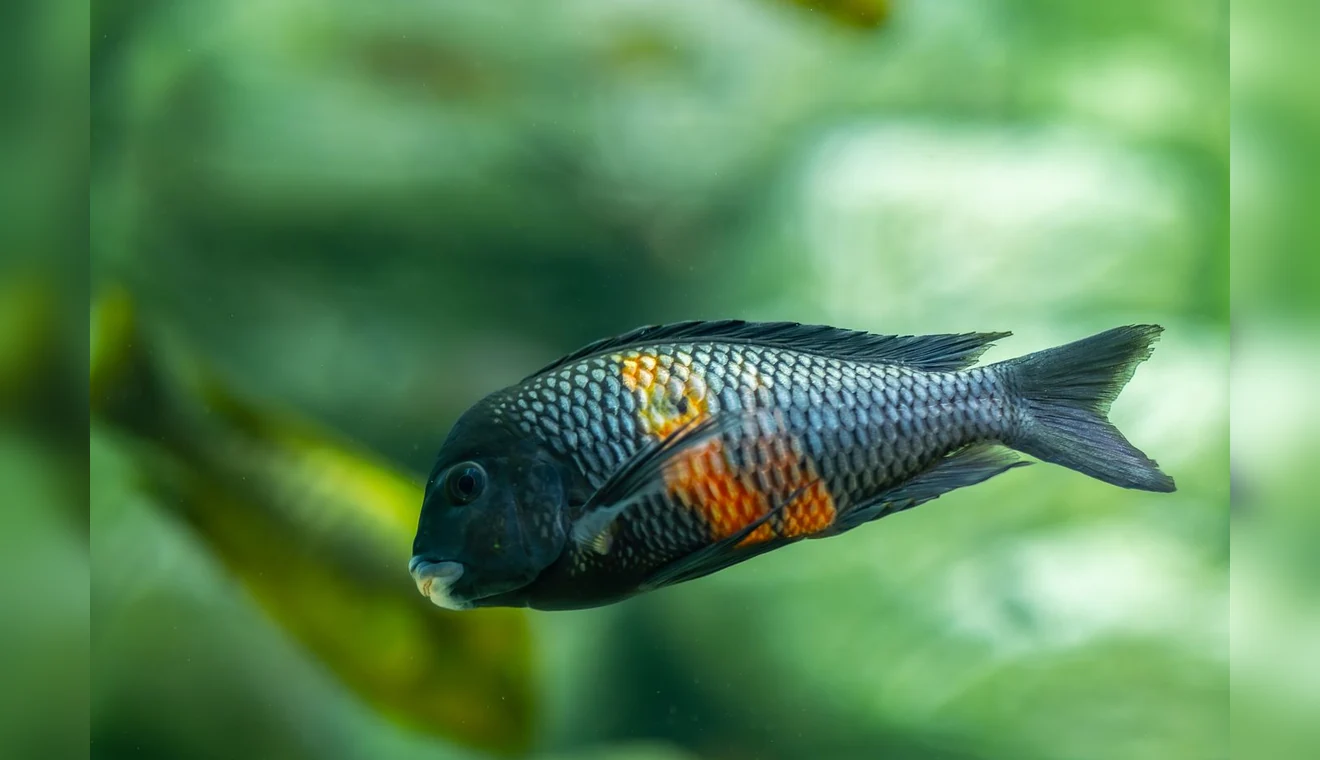
Ammonia in an established freshwater aquarium should normally test at zero. If you detect it with livestock present, take the result seriously, review the test and act promptly to protect the animals. The right response is to reduce exposure and identify why the biological filter isn't processing the waste.
Why ammonia is dangerous to fish
Ammonia comes from fish waste and the breakdown of uneaten food and decaying organic material.
In a mature aquarium, beneficial microorganisms convert it first to nitrite and then to nitrate. This process is the nitrogen cycle and depends on a functioning biological filter and sufficient oxygen.
Ammonia is toxic to fish, while nitrite is also dangerous. The Ornamental Aquatic Trade Association (OATA) lists zero mg/L ammonia and zero mg/L nitrite as the normal target for home freshwater aquariums.
Don't judge water quality by the clarity of the glass. Harmful concentrations may be present without visible cloudiness or smell.
What should you do immediately?
If an occupied aquarium shows measurable ammonia, take the following precautions rather than waiting for it to disappear.
- Check the result. Follow the test kit's instructions, expiry date and timing precisely. Test a fresh sample from the main body of the aquarium.
- Observe the fish. Rapid breathing, surface gasping, loss of balance, lethargy or unusual gill behaviour need prompt expert advice.
- Check the filter and aeration. Confirm water is flowing through the established media and equipment is working correctly.
- Seek advice on an appropriate partial water change. Condition and temperature-match replacement water to reduce exposure without creating abrupt chemical changes.
- Remove obvious waste. Take out uneaten food, rotting leaves or any dead animal promptly and carefully.
- Avoid adding more livestock. A filter already struggling with waste needs stability, not additional feeding and stocking.
- Retest and record. Continue monitoring ammonia and nitrite as advised until the system is stable again.
If animals are distressed or readings are markedly elevated, contact a knowledgeable aquatic specialist or aquatic vet urgently. A single generic percentage water change is not a complete emergency protocol for every species.
Why does ammonia rise in a new fish tank?
A brand-new filter doesn't yet have a mature population of nitrifying microorganisms.
An aquarium can look ready after two days, but it may take several weeks or longer for biological filtration to establish under a suitable fishless-cycling method.
OATA recommends fishless cycling as an approach that allows the filter to mature before animals arrive. The filter is ready only when it can process an appropriate ammonia challenge and ammonia and nitrite return to zero under the method's conditions.
Our Fish Tank Cycling Guide explains the process. Don't rely on a calendar or clear water alone.
If fish are already in an uncycled tank
Never add a strong dose of cycling ammonia intended for an empty aquarium. You need to protect the livestock, monitor water chemistry closely and follow expert guidance on water changes, feeding and maintaining aeration.
Avoid a blanket instruction to “leave the tank alone for four weeks”. Harmful ammonia is not something fish simply have to endure.
Seven common causes of high ammonia
1. Overfeeding
Food the animals don't eat can decay and release ammonia. Feed appropriate portions and remove uneaten food before it breaks down.
A surprising amount of waste can accumulate behind rocks and ornaments, even in a visually tidy tank.
2. Adding too many fish at once
An established filter is adapted to its usual waste load. Suddenly doubling the population can exceed the bacteria's capacity.
Introduce suitable animals gradually and plan stocking around species needs, adult size and filtration.
3. Replacing all the filter media
Much of the beneficial microbial population lives on filter media. Throwing away every old sponge and biological ring can disrupt the nitrogen cycle.
Only replace media when necessary, according to manufacturer guidance, and preserve established biological material where possible.
4. Washing filter sponges under untreated tap water
Chlorine or chloramine in water may damage useful microorganisms. OATA advises rinsing reusable filter media gently in removed aquarium water during routine maintenance.
Do not clean the whole filter aggressively just because it looks brown.
5. Filter failure or power loss
A stopped pump, blocked impeller or prolonged outage can reduce water flow and oxygen to the bacteria.
Check equipment promptly and seek specialist guidance if a filter has been without circulation for a prolonged period.
6. A dead fish or decaying plant matter
Organic material releases waste as it breaks down. Remove dead livestock, rotting plants and accumulated food carefully.
Look behind décor and in filter intakes for anything trapped, without turning the entire aquarium upside down.
7. A recent medication or chemical treatment
Some treatments may affect biological filtration or water chemistry. Review any recent medication and its instructions.
Don't stop prescribed treatment or add an untested chemical without speaking to an aquatic specialist or vet.
Ammonia, ammonium and pH
Many common aquarium test kits report total ammonia, which includes un-ionised ammonia (NH₃) and ammonium (NH₄⁺). The proportion changes with pH and temperature, and un-ionised ammonia is particularly toxic.
This is why two tanks with the same total ammonia reading may not have identical risk. It is also why you shouldn't try to solve an ammonia problem by suddenly changing pH with chemicals.
Use an appropriate test kit, know your normal pH and temperature, and ask an expert about interpreting unusual readings. Don't attempt complicated chemical corrections based on an online calculator alone.
For serious problems, understanding the test method and livestock is more valuable than blindly dosing products.
Should you use an ammonia-remover product?
Some aquarium products temporarily bind or detoxify ammonia, but their effects and interactions with different tests can vary.
These products are not substitutes for a mature filter, safe water changes and finding the underlying cause. Certain tests may still detect ammonia after treatment, depending on the chemistry involved.
Follow a reputable aquatic specialist's advice about the particular product and the livestock in your tank. Don't pour several treatments together hoping for a faster result.
How often should you change water when ammonia is high?
There is no single percentage that's appropriate for every emergency. The aim is to reduce toxic exposure without introducing sudden temperature, pH, hardness or salinity changes.
OATA's routine freshwater guidance refers to partial changes of up to approximately 25% per week, but that routine schedule is not a limit for responding to an aquarium emergency.
With raised ammonia, changes may need to be more frequent or differently sized under expert guidance. Use conditioned, temperature-matched replacement water and retest.
Our Fish Tank Water Changes Guide explains safe preparation and routine technique.
Do not undertake a complete strip-down, replace all biological media and change every litre of water as your first reaction.
What if ammonia is zero but nitrite is high?
That's still a problem. The biological filter may be converting ammonia to nitrite faster than it processes nitrite to nitrate.
OATA states that both should normally remain at zero in a mature aquarium. Follow similar protective principles and obtain species-specific guidance.
A zero ammonia reading alone is not proof that a new aquarium is fully cycled.
How to stop the problem returning
Keep feeding appropriate, test water regularly and maintain the filter without destroying its microbial population.
Stock the aquarium gradually. Inspect the pump and temperature, and keep a log of any changes to feeding, livestock or equipment.
Ask an aquatic specialist to review your filtration if ammonia keeps returning. A larger filter may be helpful in some setups, but a filter upgrade doesn't repair inappropriate stocking or poor maintenance on its own.
If you have shrimp, axolotls or other sensitive animals, seek the relevant species-specific care requirements rather than following a general tropical-fish recipe.
Common ammonia mistakes
Waiting until fish look ill
Clear water and active fish cannot rule out harmful ammonia.
Assuming the filter cartridge is disposable every week
Replacing established media unnecessarily can destabilise biological filtration.
Adding more cycling ammonia with fish present
Fishless-cycling doses are for unoccupied aquariums, not tanks containing livestock.
Making extreme pH changes
Sudden chemistry changes can increase stress and alter ammonia toxicity.
Relying on a chemical bottle alone
An ammonia-binding product doesn't replace working biological filtration.
High-ammonia aquarium questions
Is 0.25 mg/L ammonia safe?
The normal OATA target is zero. Interpretation depends on test type, pH, temperature and livestock, so repeat the test and seek suitable advice rather than dismissing the reading.
Can plants remove ammonia?
Plants may use some nitrogen, but a planted tank still needs suitable filtration and monitoring.
Does clear water mean the cycle is complete?
No. You must test ammonia and nitrite and establish that the filter handles the waste load.
Will a water change kill the filter bacteria?
An appropriate partial change normally leaves most established bacteria on surfaces and filter media. Replacing or sterilising all media is a larger risk.
Fix the cause as well as the reading
Measurable ammonia is a signal to check the animals, test kit, waste load and biological filter together.
Protect the livestock first, then find out whether overfeeding, new stocking, filter damage or decaying matter caused the rise. Once the system is stable, regular testing and maintenance are what keep it that way.
Sources and further reading
- OATA: How to Test Water Quality in a Freshwater Aquarium — ammonia, nitrite and nitrate testing.
- OATA: How to Set Up and Look After a Freshwater Aquarium — biological filtration, cycling and species-appropriate water changes.