How to Tame a Budgie: Gentle Step-Up Training for Beginners
A new budgie may cling to the furthest perch whenever you approach. It can be tempting to hurry things along, especially when you've seen videos of birds stepping onto fingers within minutes. But a frightened budgie doesn't need a firmer hand. It needs a safe environment and a reason to trust you.
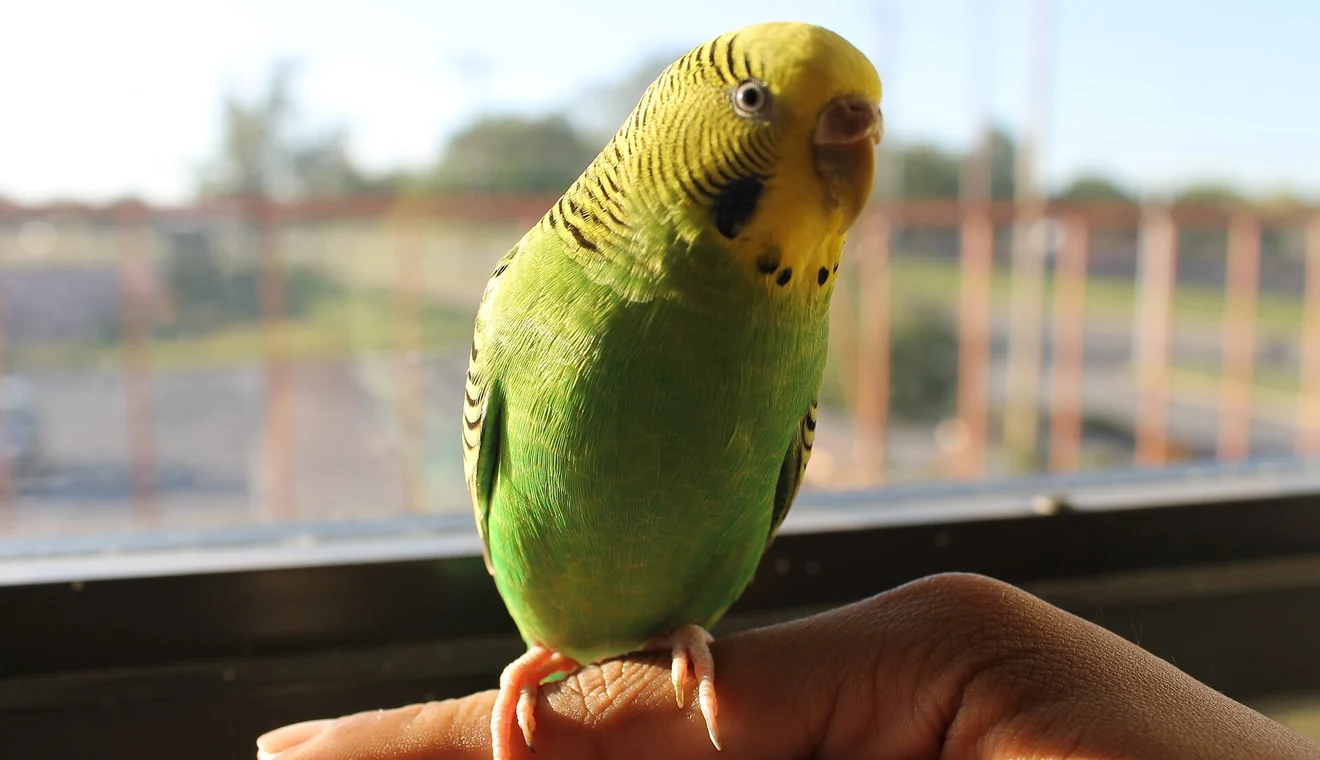
The aim of budgie taming is to build confidence through voluntary, reward-based training. That starts long before your bird hops onto a finger. You are teaching it that people, movement and everyday care can be predictable and safe.
Start with a secure home and some quiet time
Before asking a budgie to approach, give it time to settle into the new surroundings. Provide suitable perches, fresh water, a proper diet, opportunities to forage and enough space for movement.
Keep the cage in a stable location away from sudden draughts, cooking fumes, constant disturbance and other pets. Birds need an uninterrupted dark resting period, not a television left blaring all night.
Sit nearby without staring or making sudden movements. Talk quietly and allow the bird to choose whether to investigate you. Some budgies are curious on the first day; others remain wary for a while.
Do not grab a budgie to “show it you're friendly”. Forced handling can make later training more difficult and can injure a small bird.
What a comfortable budgie looks like
Your bird should be alert, eating, preening normally and able to move freely between safe perches. A calm bird might chatter or watch your movements without leaning away.
Signs of discomfort may include freezing, trying to escape, sharp alarm calls or repeatedly moving to the furthest side of the cage when your hand approaches.
Watch the whole bird rather than interpreting one head movement. Our budgie body language guide helps distinguish normal responses from illness-related warnings such as pronounced tail movement with breathing.
A new bird that remains fluffed up, inactive or isn't eating needs avian veterinary advice, not more training sessions.
Step 1: Let the budgie get used to your presence
Sit beside the enclosure at a comfortable distance and speak softly. Move the food and water dishes in a predictable way, avoiding unnecessary interference with the bird's sleeping area.
If the bird immediately retreats whenever you approach, sit further away. Over a number of relaxed sessions, reduce the distance only if the bird remains comfortable.
There is no benefit in forcing an exact timetable. The bird learns from repeated calm experiences, not from being exposed to something frightening until it stops reacting.
Other household members should follow the same approach. One person training gently while another chases the budgie around the cage is unlikely to build trust.
Step 2: Offer a suitable food reward
A tiny piece of a favourite appropriate food, such as millet spray, can make training rewarding. Use the reward in moderation as part of a balanced budgie diet.
At first, hold the food near the cage bars or at an open entrance without following the bird. Let it come towards you. If it ignores the food, withdraw calmly and try another time.
Once it eats comfortably, shorten the distance between the treat and your fingers. Your hand must remain steady and easy to avoid.
Never withhold the normal diet to force a hungry bird into training. Voluntary cooperation is the point.
Step 3: Introduce a perch before your finger
For a nervous budgie, a familiar hand-held perch can be easier than stepping directly onto a large hand. RSPCA training guidance specifically includes teaching birds to step onto and off a hand or small stick.
Present the perch near the bird at a comfortable height. Reward looking towards it, approaching it and eventually placing a foot on it. Do not press it into the bird's chest or belly.
When the bird willingly steps on, give an immediate reward. Keep movements small and bring it back to a stable perch before it becomes anxious.
Repeat until the process feels ordinary. A confident bird may progress quickly; a cautious bird may need many short sessions.
Step 4: Teach “step up” and “step down”
Choose one consistent cue, such as “step up”. Present the perch or finger gently and wait for the bird to choose it.
Reward stepping up immediately with a small treat or soft praise. Then offer a stable perch for “step down”, reward again and end the exercise.
The RSPCA recommends calm, positive repetition and stopping when a bird seems distressed. Avoid pushing, chasing and punishment.
If the bird takes flight, don't pursue it with your hand. Make sure windows and doors are secure and it has somewhere safe to land. Allow it to settle.
Step 5: Make hand training a natural progression
Once stepping onto a handheld perch is comfortable, try presenting a finger as the next perch while holding it steadily. Keep your finger close enough to another perch that the bird can step away easily.
A budgie may test your skin gently with its beak while balancing or exploring. That isn't always aggression. If it bites hard, move away calmly and consider whether the session was too difficult.
Avoid jerking your hand, which can cause a fall. A bird that learns hands are stable and predictable is more likely to volunteer again.
Some birds enjoy stepping onto hands but dislike being stroked. Respect that preference. Training doesn't mean every budgie must accept cuddling.
Safe practice outside the cage
Once your budgie is ready for out-of-cage activity, prepare the room first. Close doors and windows, cover hazardous glass and mirrors when needed, switch off ceiling fans, and block access to kitchens, hot appliances, uncovered water and other animals.
The RSPCA recommends suitable opportunities for flight and training recall to a perch or hand. Supervise all out-of-cage sessions and provide safe landing places.
Don't allow an untrained bird to fly around an unfamiliar room with open windows and then attempt to catch it in a panic.
Plan how the bird can return to its cage voluntarily, perhaps with a familiar perch and reward. Ending each session safely is as important as starting it.
Why forcing the bird to step up often backfires
Pushing a finger into the belly, chasing a budgie around the cage or grabbing its body may produce compliance through fear. It doesn't necessarily produce trust.
Birds also have delicate respiratory anatomy. Never squeeze the chest while handling. If restraint is medically necessary, it should be carried out by someone trained in safe avian handling.
A bird that doesn't want to step up today hasn't failed. It has communicated something about its comfort level.
Punishing bites, shouting or putting the bird back in its cage as a punishment can make the cage and your approach less predictable.
Can two budgies be trained together?
Budgies are social birds, and companionship matters to their welfare. Two birds may pay more attention to each other than to your training sessions, which is not a problem to solve by isolating one permanently.
You can work with each bird individually for brief positive sessions while maintaining suitable social contact. Use the same rewards and cues and allow each bird to progress independently.
Don't promise that buying a single budgie makes it easier to tame. Human interaction is not a substitute for appropriate budgie companionship and a stimulating environment.
Our safe budgie toys guide covers foraging and toys that provide worthwhile activities outside training.
Common budgie taming mistakes
- Trying to handle a new bird before it has settled.
- Reaching rapidly into the cage from above.
- Removing food to make the bird accept a treat.
- Pressing a perch against the chest rather than waiting for a voluntary step.
- Treating a bite as defiance.
- Expecting two birds to behave identically.
- Letting an untrained bird out into an unsafe room.
- Practising until the budgie is too tired or distressed to respond.
Frequently asked questions
How long does budgie taming take?
There is no fixed duration. Some budgies step up quickly, while others require many weeks of calm practice. Focus on changes in confidence rather than a date on the calendar.
Can an older budgie become tame?
Often, yes. Adult birds can learn new associations. The starting point depends on temperament and previous experience.
What if my budgie is frightened of hands?
Return to calm presence and rewards, then practise with a handheld perch. Don't rush directly to fingers.
Should I clip the wings to make training easier?
No. Training should be built on choice and safe flight opportunities, not on removing the bird's ability to move away. Consult an avian vet about any mobility or flight concern.
The best result is a bird that chooses you
Offer a predictable routine, a safe environment and small rewards for voluntary progress. Let the budgie decide when it feels comfortable enough to step onto a perch or hand.
A budgie that can move calmly between its cage, play area and a handheld perch is easier to care for—and more confident than one that has simply learned to freeze when caught.
Sources and further reading
- RSPCA: How to train your pet bird — reward-based step-up and flight training, safe handling and avoiding punishment.
- RSPCA: Housing and environments for pet birds — safe flight space and daily enrichment.